History
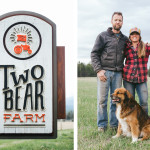
Photography by Mandy Mohler, Field Guide Designs.
Two Bear Farm was created in response to changing circumstances and a shared vision of a better future for our community. The farm is a partnership between Ten Lakes Farm, owned and operated by Todd and Rebecca Ulizio, and Whitefish philanthropist Mike Goguen.
After 6 years of growing Certified Organic vegetables for the Flathead and Tobacco valleys, Ten Lakes Farm outgrew it’s location in Eureka and needed to find a new home. At the same time, Mike Goguen was looking for a way to keep land that neighbors his ranch in agricultural production, as well as continue his support for projects that enhance our community in Whitefish. By partnering in the farm business and moving to Whitefish, we have strengthened our ability to continue to grow fresh local produce for the valley, while at the same time providing a much better platform for stewarding the land and increasing our production. We are very excited about this opportunity!
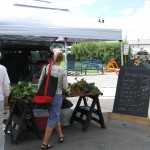
Humble Beginnings…the first farmers market stand in 2007
Our Practices

Two Bear Farm sits on 100 acres bordering the Stillwater River at the base of Spencer Mountain approximately 7 miles west of the town of Whitefish. We are passionate about land stewardship, production of healthy food that improves human health, and educating young farmers to prepare them for their own farms someday. While we have always been Certified Organic, we are always looking for ways to be better farmers and land stewards. Our farm is located in a former swamp that has a high water table and soils with high clay content, low organic matter, and are prone to compaction. While we used tillage to create the farm, break compaction, and create raised beds, we are trying to transition to a minimal tillage system to farm in a more regenerative way. This entails using more of a biological approach to farming to replace tillage, increasing organic matter so that we can keep permanent raised beds from season to season without too much compaction, and implementing a large scale process for growing crops for compost and then making compost. The overall goal is to protect the soil food web so that our farm, and the food we produce, is healthier.
Nutrient Dense Food
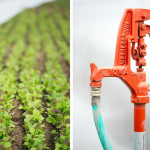
Photography by Mandy Mohler, The OCD Photographer.
I first learned of this concept when reading the book “The Intelligent Gardener” by Steve Solomon. I later learned that the Weston A. Price Foundation has been promoting this idea for decades, and groups like the Bionutrient Food Association were continuing to push the idea. The basic premise is that healthy people require healthy food, and healthy food requires healthy soil. Or to look at it the other way, if soil is deficient in important minerals, the food, and hence the people who eat that food, will also be deficient in those minerals. If not amended properly, farm land becomes degraded over time and the nutritional quality of the food it produces declines. It’s a rather simple concept, but rather mind blowing at the same time. The reason our industrial food system doesn’t talk about this is because it costs money to amend soil, and you would have to care about more than shareholder profits to take this approach. To ensure our food is as nutrient dense as possible, we use a rigorous soil testing process and amend our soils whenever necessary to bring them into balance. The extra money we spend on these amendments never gets recovered by the farm in the sales price of our food, but we continue to do it because it is the right thing to do.
Resiliency
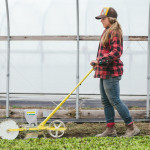
Photography by Mandy Mohler, The OCD Photographer.
We are focused on building a resilient farm that will thrive in an uncertain future. This includes producing our own soil fertility on farm through cover cropping and composting, growing our our own cover crop seed, and developing local markets that are not prone to the whims of the global commodity market. Rather than focus on energy-intensive operations that allow year round production, we focus on low energy season extension techniques and crop storage. Keeping a walk-in cooler or root cellar cold in Montana in February to store crops is a lot easier than trying to heat a greenhouse in February to grow crops.
Educating New Farmers
 As the human population continues to grow, the number of farmers has continued to decline. And the average age of a farmer in the U.S. is somewhere north of 58 years old. We are also seeing some major issues in our health statistics, which we believe stems from degraded soil, chemical use, and over-processing of food. So, getting younger people interested and excited about growing healthy, nutrient-dense food is extremely important for our future. Here at the farm, we provide a safe, risk-free environment where people can learn the skills and systems needed to run a successful farm, experience the gratification and feedback from the community, while not taking on any expensive risks.
Affecting Change
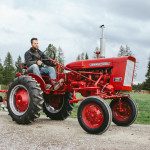
Photography by Mandy Mohler, The OCD Photographer.
We’ve always agreed with the paraphrased Ghandi quote “be the change you want to see in the world”. In today’s day and age, we believe meaningful change that benefits individuals and communities is going to have to come from the ground up. Given the extent of agency capture and the amount of industry money in politics, we have no faith that anything positive regarding our food system is going to flow from the top down. It’s time to stop waiting for our government to help us. It’s time to affect change on our own. We don’t plan on saving the world, but we do plan on improving our own lives and the lives of our neighbors. And if everyone did that, then we would change the world.